A practical, HR-friendly guide to workplace nutrition with easy snack ideas, realistic lunch tips, hydration reminders, simple recipes, and ways to make healthy eating more accessible without diet culture or pressure.
Healthy eating at work sounds simple until it’s 2:47 PM, you’ve had four meetings, lunch was eaten over your keyboard, and the only thing within reach is whatever has been sitting in the office snack drawer since last quarter.
Workplace nutrition doesn’t need to mean meal plans, calorie counting, weight-loss challenges, or someone from HR telling employees what they should eat.
In fact, it probably shouldn’t.
A better approach is to make nutritious options easier, more accessible, and less complicated.
Think:
- Easy snacks
- More satisfying lunches
- Water within reach
- Simple recipes
- Better options in shared kitchens
- Gentle reminders to actually step away and eat
The goal isn’t perfect eating.
It’s making the workday a little easier to fuel.
Table of contents
- First: Keep Workplace Nutrition Inclusive
- 1. Build a Better Workday Snack
- 2. Upgrade Lunch Without Reinventing Lunch
- 3. Remember the Most Forgotten Nutrient: Water
- 4. Protect the Lunch Break
- 5. Keep a Few Emergency Foods Around
- 6. Try These Three Ridiculously Easy Recipes
- 7. Make Nutrition Social Without Making It Competitive
- 8. Don’t Forget Remote Employees
- 9. Give Employees Choice Whenever Possible
- 10. Make Nutrition Part of the Employee Experience
- A Simple Weekly Nutrition Rhythm for HR Teams
- What Success Actually Looks Like
- Final Thought
First: Keep Workplace Nutrition Inclusive
Food is personal.
It can be influenced by culture, religion, allergies, medical needs, finances, family traditions, sensory preferences, ethical choices, and countless other factors.
That means workplace nutrition initiatives should focus on options and education—not judgment.
Avoid messaging around:
- Weight loss
- “Good” versus “bad” foods
- Calories burned or consumed
- Body size
- “Cheat meals”
- Detoxes or cleanses
- Public food tracking
- Mandatory nutrition challenges
Instead, use language like:
- “Easy ways to stay fueled during the workday”
- “Ideas for more satisfying snacks”
- “Simple lunch inspiration”
- “Add an option that works for you”
- “Try it if it sounds helpful”
Nutrition support should feel like a resource, not surveillance.
1. Build a Better Workday Snack
The ideal workplace snack isn’t necessarily the trendiest superfood.
It’s something you’ll actually eat.
One simple approach is to combine foods that offer different nutrients, textures, and enough staying power to get you to your next meal.
Try:
- Apple + peanut or sunflower seed butter
- Greek yogurt + berries
- Crackers + hummus
- Banana + a handful of nuts
- Cheese + fruit
- Carrots or cucumbers + dip
- Toast + avocado
- Popcorn + nuts or seeds
- Hard-boiled egg + fruit
- Trail mix with nuts, seeds, dried fruit, or cereal
For office teams, try stocking variety instead of one definition of “healthy.”
Think sweet, savory, crunchy, fresh, shelf-stable, allergy-aware, and culturally varied options.
And if you’re managing snacks for a larger team, Snackmagic’s workplace snack boxes make it easier to give employees choice rather than assuming everyone wants the same thing. Snackmagic currently offers thousands of snack and beverage options across a range of tastes, allergies, and dietary preferences.
2. Upgrade Lunch Without Reinventing Lunch
Nobody needs a 14-container Sunday meal-prep system just to eat lunch on Tuesday.
A practical workday lunch can follow a simple mix-and-match approach.
Pick a base:
Rice, bread, pasta, potatoes, quinoa, greens, wraps, or whatever you enjoy.
Add protein:
Chicken, tofu, beans, lentils, eggs, fish, yogurt, cheese, or another option that works for you.
Add produce:
Fresh, frozen, roasted, canned—it all counts.
Add flavor:
Sauce, dressing, salsa, pesto, herbs, spices, hummus, avocado.
That could become:
Mediterranean Bowl
Rice + chickpeas + cucumber + tomato + feta + hummus
Easy Taco Bowl
Rice + beans + salsa + avocado + corn + cheese
Desk-Friendly Wrap
Turkey or tofu + greens + tomato + cheese + your favorite spread
Leftover Remix
Last night’s protein + whatever grain or vegetable is already in the fridge
Healthy eating becomes much easier when we stop expecting lunch to look like a professionally photographed salad.
3. Remember the Most Forgotten Nutrient: Water
Sometimes the biggest workplace nutrition challenge is simply forgetting to drink anything between your first coffee and 4 PM.
Make hydration easier by connecting it to habits you already have.
Try:
- Drink some water when you first sit down
- Refill your bottle before a meeting block
- Keep water visible on your desk
- Drink something with lunch
- Refill when you make coffee or tea
- Try sparkling water, fruit, or herbs if plain water isn’t your thing
HR teams can help simply by making hydration convenient: accessible water stations, reusable bottles, beverages at events, and occasional low-pressure reminders.
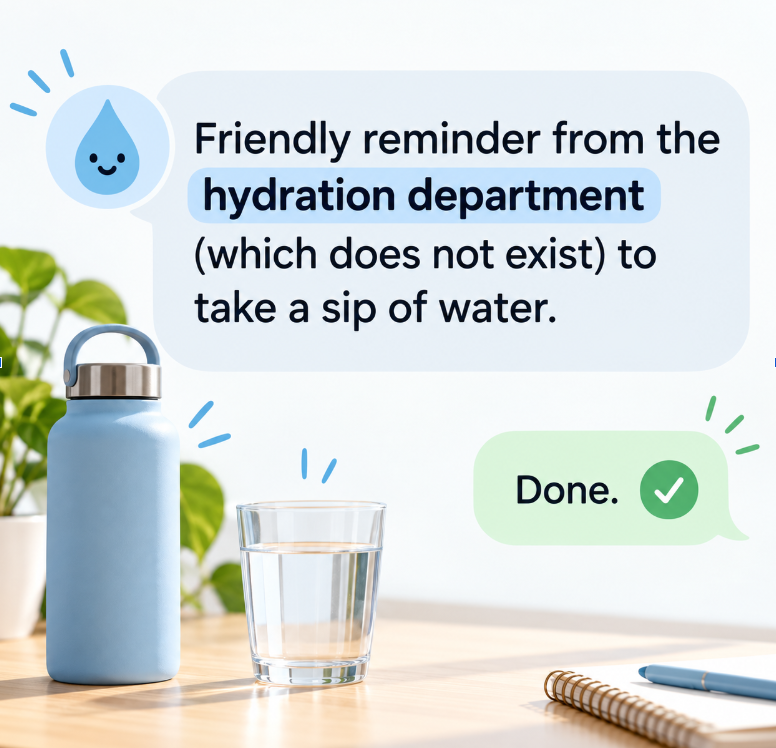
A Slack message can literally be:
4. Protect the Lunch Break
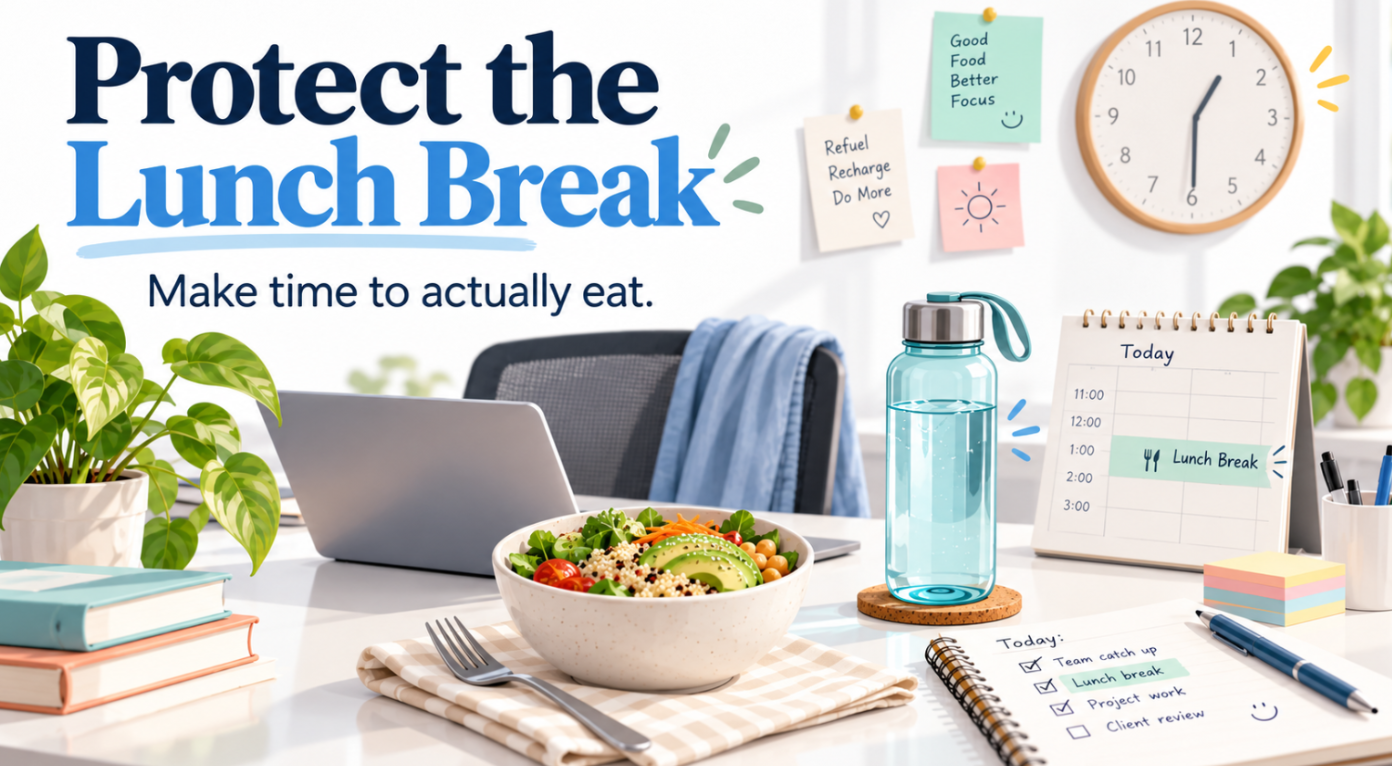
You can offer employees all the nutrition resources in the world, but they aren’t particularly useful if nobody has time to eat.
One of the most meaningful workplace nutrition practices is simply normalizing an actual lunch break.
Managers can help by:
- Avoiding recurring meetings over lunch when possible
- Taking lunch breaks themselves
- Not expecting instant responses during breaks
- Encouraging employees to step away from their screens
- Leaving small gaps between meeting blocks
The goal isn’t to regulate when people eat.
It’s to create enough breathing room that they actually can.
5. Keep a Few Emergency Foods Around
Some days, lunch planning simply doesn’t happen.
Create a personal or office “backup shelf” with easy options like:
- Oatmeal
- Nut or seed butter
- Crackers
- Tuna or bean packets
- Soup
- Shelf-stable rice
- Nuts and seeds
- Dried fruit
- Granola
- Snack bars
- Canned beans
Think of it as the culinary equivalent of keeping an umbrella in your car.
Not glamorous. Extremely useful.
For People teams, this can also become part of a more consistent workplace snack strategy. Snackmagic offers snack boxes and bulk snack options for remote teams and in-person groups, which can help make grab-and-go food easier to keep available across different work environments.
6. Try These Three Ridiculously Easy Recipes
The Five-Minute Yogurt Bowl
Add:
- Yogurt
- Fruit
- Granola
- Nuts or seeds
- Optional drizzle of honey
No cooking. Barely a recipe. Still breakfast or lunch.
The “I Forgot to Meal Prep” Chickpea Bowl
Mix:
- Chickpeas
- Chopped cucumber
- Tomato
- Feta
- Olive oil
- Lemon
- Salt, pepper, or herbs
Eat alone, over greens, or inside a pita.
The Everything-in-the-Fridge Wrap
Start with a tortilla.
Add:
- Hummus or another spread
- Leftover protein
- Any vegetables you have
- Cheese if you want it
- Sauce or dressing
Roll.
Congratulations. You cooked.
7. Make Nutrition Social Without Making It Competitive
Food can also be a great workplace culture-builder.
Try:
- Recipe swaps
- “What did you make for lunch?” Slack threads
- Employee recipe spotlights
- Cultural food celebrations
- Smoothie or snack tastings
- Team recipe books
- Potlucks with clear ingredient and allergy labeling
For something more structured, teams can also turn food into an experience through a virtual cooking class with Confetti. Confetti offers live cooking experiences designed for remote and hybrid teams, which can turn food into a shared activity rather than another wellness assignment.
The important part: keep participation optional.
Nobody needs their manager evaluating their sandwich.
8. Don’t Forget Remote Employees
Healthy workplace eating shouldn’t only mean what’s sitting in the office kitchen.
For remote and hybrid teams, consider:
- Snack allowances
- Meal stipends
- Occasional team snack drops
- Virtual cooking or tasting experiences
- Employee-choice snack boxes
When employees work across different locations, giving people choice can work better than sending everyone the exact same thing.
With Snackmagic’s personalized snack boxes, recipients can choose their own treats, which is especially useful when employees have different preferences, dietary needs, or home setup.
9. Give Employees Choice Whenever Possible
One employee’s ideal snack is another employee’s untouched desk drawer ornament.
Choice matters.
Instead of deciding that every employee needs almonds and protein bars, offer several kinds of options and let people determine what works for them.
Snackmagic’s curated and customizable snack options include a range of familiar favorites, emerging brands, drinks, and boxes designed around different dietary preferences.
This is a useful principle beyond snacks too:
Provide access. Provide information. Let employees choose.
That’s usually a much more sustainable approach to workplace wellness than trying to prescribe behavior.
10. Make Nutrition Part of the Employee Experience
Nutrition doesn’t have to sit in its own little “wellness” corner.
It can connect naturally to:
- Onboarding
- Employee appreciation
- Milestones
- Team events
- Recognition
- Office perks
- Remote employee engagement
For companies looking at the bigger picture, Stadium’s HR solutions bring together snacks, gifting, rewards, and employee engagement programs in one broader employee experience ecosystem.
The point isn’t to turn every snack into an HR program.
It’s to recognize that small everyday perks can contribute to how supported employees feel.
A Simple Weekly Nutrition Rhythm for HR Teams
You don’t need to launch a giant “Nutrition Month.”
Try one tiny touchpoint each day for a week (and see how it goes engagement wise):
Monday: Easy snack idea
Tuesday: Hydration reminder
Wednesday: Employee recipe or lunch spotlight
Thursday: Five-minute recipe
Friday: “What was your best meal this week?” prompt
Short. Useful. Repeatable.
What Success Actually Looks Like
Not:
- Everyone meal prepping
- Everyone eating the same foods
- Perfect participation
- Employees tracking every bite
- A company-wide transformation into people who suddenly love kale
Instead:
- People remembering to eat lunch
- More food options being available
- Employees discovering a new recipe
- More people stepping away from their screens to eat
- Hydration becoming easier
- Food becoming another small way employees connect
Final Thought
The best workplace nutrition program probably doesn’t feel like a nutrition program.
It feels like your company making everyday life slightly easier.
Put more options within reach. Share useful ideas. Make time for lunch. Keep the language inclusive. Let adults decide what works for them.
Whether that means stocking the kitchen, swapping recipes, protecting lunch breaks, or giving your team the freedom to build their own Snackmagic snack boxes, small changes can make nutritious choices feel much more realistic.
Because sometimes workplace wellness doesn’t need another initiative.
Sometimes it’s just water on the desk, something good to eat nearby, and enough time between meetings to actually enjoy it.